Gdańsk, located on Poland's Baltic coast, is one of the country's most dynamic and prosperous cities. Together with Sopot and Gdynia (the Tri-City area), Gdańsk forms a powerful metropolitan region renowned for its modern economy, robust job market, and high quality of life. It is home to major seaports, shipyards, logistics hubs, IT parks, and multinational companies.
Due to constant expansion in logistics, shipbuilding, warehouse operations, transport, construction, and IT, Gdańsk hires thousands of foreign workers every year and offers safe, legal, long-term job opportunities supported by Polish work permit and visa processes.
Workers from India, Nepal, Bangladesh, Sri Lanka, the Philippines, Vietnam, Nigeria, Kenya, Egypt, and many other countries choose Gdańsk because it provides:
Gdańsk is an ideal destination for both skilled and semi-skilled workers seeking to establish a stable life in Europe.
Gdańsk has one of Poland's strongest labour demands in the maritime industries, logistics, transport, and construction sectors.
|
Job Title |
Short Description |
Estimated Gross Salary (€) |
Working Hours |
|---|---|---|---|
|
Shipyard Worker |
Metal cutting, welding, and assembly |
1,900–2,800 |
40–48 hrs/week |
|
Welder |
MIG/TIG/Arc welding |
2,200–3,200 |
40–45 hrs/week |
|
Electrician |
Electrical installation & repairs |
2,000–2,800 |
40 hrs/week |
|
Warehouse Worker |
Picking, packing, sorting |
1,600–2,200 |
40–45 hrs/week |
|
Forklift Operator |
Operating forklifts in ports/warehouses |
1,700–2,400 |
40–45 hrs/week |
|
Crane Operator |
Port & construction crane operation |
2,000–3,000 |
40–48 hrs/week |
|
Production Worker |
Assembly line operations |
1,600–2,300 |
40 hrs/week |
|
Machine Operator |
Operating industrial machines |
1,700–2,500 |
40 hrs/week |
|
Truck Driver |
Domestic & EU transport |
2,100–2,900 |
48–55 hrs/week |
|
Construction Helper |
Site labour & assistance |
1,600–2,200 |
40–48 hrs/week |
|
Concrete Worker |
Pouring & finishing concrete |
1,600–2,200 |
40 hrs/week |
|
Painter |
Industrial & residential painting |
1,600–2,300 |
40 hrs/week |
|
Plumber |
Water, heating & pipe installations |
1,800–2,600 |
40 hrs/week |
|
Carpenter |
Wood structures & interiors |
1,800–2,500 |
40–48 hrs/week |
|
Industrial Cleaner |
Cleaning factories & ports |
1,500–2,000 |
40 hrs/week |
|
Port Loader/Unloader |
Cargo handling at the port |
1,700–2,500 |
40–48 hrs/week |
|
Fisherman/Sea Worker |
Seafood packaging & fishing tasks |
1,600–2,200 |
40–48 hrs/week |
Gdańsk is a rapidly growing business hub with multinational companies hiring international professionals.
|
Job Title |
Short Description |
Estimated Gross Salary (€) |
Working Hours |
|---|---|---|---|
|
Customer Service Specialist |
Assisting English-speaking clients |
1,800–2,700 |
40 hrs/week |
|
IT Support Specialist |
Technical troubleshooting |
2,400–3,500 |
40 hrs/week |
|
Software Developer |
Backend, frontend, full-stack |
3,000–6,000 |
40 hrs/week |
|
Business Analyst |
Data & process analysis |
2,800–4,500 |
40 hrs/week |
|
Accountant |
Financial records & reporting |
2,500–4,000 |
40 hrs/week |
|
HR Specialist |
Recruitment & HR support |
2,200–3,800 |
40 hrs/week |
|
Logistics Coordinator |
Supply chain operations |
2,400–3,500 |
40 hrs/week |
|
Graphic Designer |
Digital & print design |
2,200–3,500 |
40 hrs/week |
|
Marketing Specialist |
Market research & campaigns |
2,800–4,500 |
40 hrs/week |
|
Engineer (Mechanical/Electrical) |
Engineering operations |
3,000–5,000 |
40 hrs/week |
|
English Teacher |
International schools & academies |
2,200–3,200 |
40 hrs/week |
Gdańsk is renowned for its stunning beaches, historic city centre, modern shopping malls, and well-developed transportation system.
1. Do I need a work permit to work legally in Gdańsk?
Yes. All non-EU nationals require a work permit issued by an employer based in Gdańsk or the Pomeranian Voivodeship. The employer applies for the license at the Voivodeship Office, and this document is mandatory for your National Visa Type D application.
2. Can I get a job in Gdańsk while living outside Poland?
Yes. Many companies in Gdańsk hire international workers directly from Asia, Africa, and the Middle East through online applications. Verified platforms like AtoZSerwisPlus.pl and the Polish state job portal: https://oferty.praca.gov.pl help foreigners get legal jobs with work permit support.
3. Which industries hire foreigners the most in Gdańsk?
The most significant demand for foreign workers is found in shipyards, logistics, seaports, warehousing, production factories, construction, seafood processing, hospitality, customer service, and the IT sector.
4. How long does the work permit process take in Gdańsk?
Work permit processing takes 30–90 days, depending on working seasons and the employer's compliance. Shipyard and logistics permits sometimes take longer due to high demand.
5. Do Gdańsk employers provide accommodation?
Many blue-collar employers offer accommodation, often at no cost or a minimal fee. Shared rooms are standard. Office jobs generally do not include housing, but rentals are readily available.
6. Is Gdańsk safe for foreigners?
Yes. Gdańsk is one of Poland's safest cities with a calm, friendly atmosphere and low crime rates. It's a comfortable city for foreign workers, families, and students.
7. What blue-collar jobs are easiest to get in Gdańsk?
Warehouse workers, packers, forklift operators, shipyard labourers, welders, cleaners, electricians, carpenters, construction helpers, and seafood factory workers are in high demand.
8. What white-collar jobs are available in Gdańsk?
Customer service, IT support, software development, HR, finance, logistics, marketing, and engineering positions are regularly available due to the expansion of multinational companies.
9. How much can I earn in Gdańsk?
10. Do I need to speak Polish to work in Gdańsk?
For factory and port work — not required. Basic English is enough.
For an office, IT, or management role, basic Polish (A2–B1) may be helpful.
11. How affordable is it to live in Gdańsk?
Gdańsk offers a high standard of living at moderate costs. Rent, food, and transportation are cheaper than in Warsaw but slightly higher than in small cities.
12. Is public transport good in Gdańsk?
Yes. Gdańsk has trams, buses, and SKM trains connecting to Gdynia and Sopot, as well as excellent transport passes.
13. Can women find jobs easily in Gdańsk?
Yes. Women are employed in various roles, including packaging, food factories, cleaning, supermarkets, customer service, HR, accounting, and office jobs.
14. Do companies offer night shifts?
Yes. Warehouses, ports, factories, seafood plants, and some logistics centres operate 24/7.
15. Does the embassy check employers in Gdańsk?
Yes. Embassy officers verify the employer's registration (KRS/REGON/NIP), salary, work permit, and job details before granting visas.
16. Can I change employers after arrival?
Yes, but you will need to obtain a new work permit from your new employer. Working without a valid license is illegal.
17. What documents do I need for the visa?
Passport, work permit, contract, accommodation proof, travel insurance, bank statements, employer KRS/REGON/NIP, photos, and visa application. Official guidelines:
https://www.gov.pl/web/diplomacy/visas
18. Do I need a PESEL number?
A PESEL is valid for bank accounts, rentals, and healthcare, but it is not mandatory initially. It can be obtained after address registration.
19. How long does a TRC take in Gdańsk?
The Temporary Residence Card (TRC) takes 3–9 months, depending on the workload at the Voivodeship Office.
20. Can I travel to other EU countries from Gdańsk?
Yes. With a Polish work visa or TRC, you can visit Schengen countries for up to 90 days every 180 days.
21. Are there international communities in Gdańsk?
Yes. Large communities from India, Nepal, Bangladesh, the Philippines, Vietnam, Ukraine, Nigeria, Kenya, Turkey, and the Middle East live in Gdańsk.
22. Is seafood or fish industry work common in Gdańsk?
Yes. Gdańsk's coastal location creates strong demand in fish processing and seafood packaging factories.
23. Are salaries paid monthly?
Yes. Salaries are paid monthly, typically around the 10th to 15th of each month.
24. Do I need medical tests for jobs?
Most industrial, warehouse, and food factory jobs require basic health check-ups. Your employer arranges this.
25. What happens if I lose my job in Gdańsk?
You must find a new employer immediately so they can apply for a new work permit. Your stay remains legal if the new application starts quickly.
26. Is Gdańsk suitable for long-term settlement?
Yes. Gdańsk is a modern, safe, and comfortable city. Many foreigners settle here permanently and later apply for PR or citizenship.
27. Can couples find work together in Gdańsk?
Yes. Warehouses, factories, cleaning companies, and hospitality businesses often hire couples.
28. What is the weather like in Gdańsk?
Gdańsk is located on the coast, with cold, windy winters (-5°C to 5°C) and mild summers (20–25°C). The sea breeze makes the climate fresher, but it is colder in winter.
29. How do I verify a Gdańsk employer?
Use official government databases:
KRS: https://ekrs.ms.gov.pl
CEIDG: https://aplikacja.ceidg.gov.pl
30. Is Gdańsk expensive compared to other Polish cities?
More expensive than Bydgoszcz or Łódź but cheaper than Warsaw. Salaries are higher in port and shipyard jobs.
31. Are public hospitals good?
Yes. Gdańsk has advanced healthcare facilities and private clinics with English-speaking doctors.
32. Can I open a bank account easily?
Yes. Bring your passport, visa, and work contract. Banks like ING, Santander, PKO BP, and mBank support foreigners.
33. Are there halal and Asian grocery stores?
Yes. Gdańsk has multiple halal shops, Indian stores, Vietnamese shops, and African markets.
34. Does Gdańsk have an airport?
Yes. Gdańsk Lech Wałęsa Airport connects to Europe and Middle Eastern destinations.
35. Are part-time jobs available?
Yes. Hospitality, food service, cleaning, and delivery companies offer part-time shifts.
36. Can I rent a flat without TRC?
Yes. Many landlords accept a passport, work contract, and visa.
37. Do companies provide safety gear?
Yes. Shipyards, construction, and industrial companies provide PPE such as shoes, helmets, gloves, and vests.
38. Can I apply for PR after living in Gdańsk for some years?
Yes. After a long-term legal stay and stable employment, you can apply for Permanent Residency.
39. Are IT jobs good in Gdańsk?
Yes. Gdańsk is one of Poland's growing IT hubs, home to numerous multinational tech firms.
40. Are interviews required?
Some employers conduct online interviews with candidates, while others hire directly based on a candidate's CV and experience.
41. Do I need travel insurance?
Yes. For the visa application, you must provide travel insurance that covers at least €30,000.
42. Are Polish people friendly to foreigners?
Yes. Gdańsk is multicultural and tourist-friendly. Locals are used to international visitors and workers.
43. Is there overtime pay?
Yes. Overtime is paid according to Polish labour law and is usually higher in port and factory jobs.
44. Can I work two jobs?
Yes, if you have separate work permits for each employer.
45. Does the embassy reject applications often?
Rejections happen if documents are fake, unclear, or incomplete. Genuine applications with legal work permits are approved.
46. Are seafood factories safe to work in?
Yes. They follow hygiene and safety standards. Conditions can be cold due to temperature-controlled environments.
47. Can I work during TRC processing?
Yes. Once your TRC application is submitted, you can continue working legally.
48. Do employers help with document preparation?
Yes. Legal employers provide work permits, contracts, insurance registration, and sometimes accommodation letters.
49. Can I extend my stay in Gdańsk?
Yes. By applying for a TRC before your visa expires.
50. What is the safest way to migrate to Gdańsk?
Apply only through verified employers, use government portals, avoid paying agents for job offers, ensure your documents are genuine, and follow embassy instructions exactly. This ensures safe and legal migration.
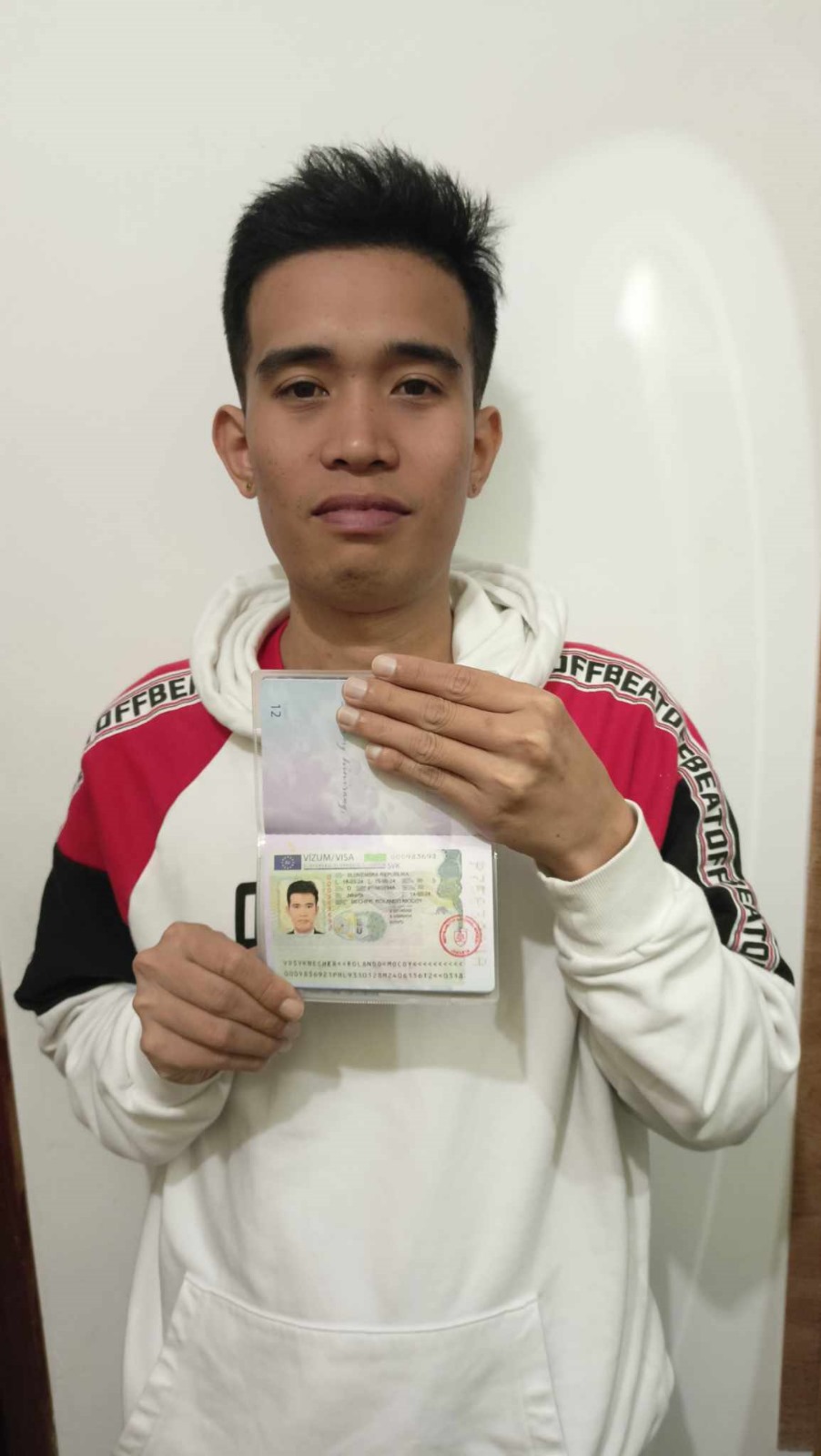
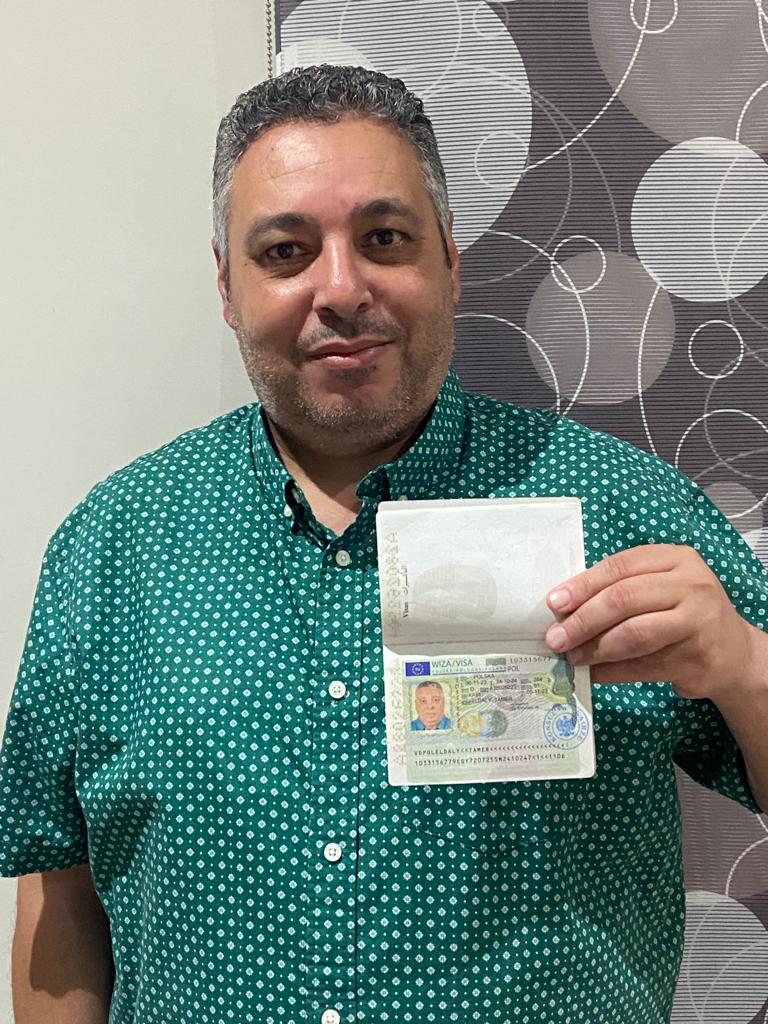
Global clients share how AtoZ Serwis Plus helped them secure work permits, visas, and career support across Europe. Real stories. Real results.
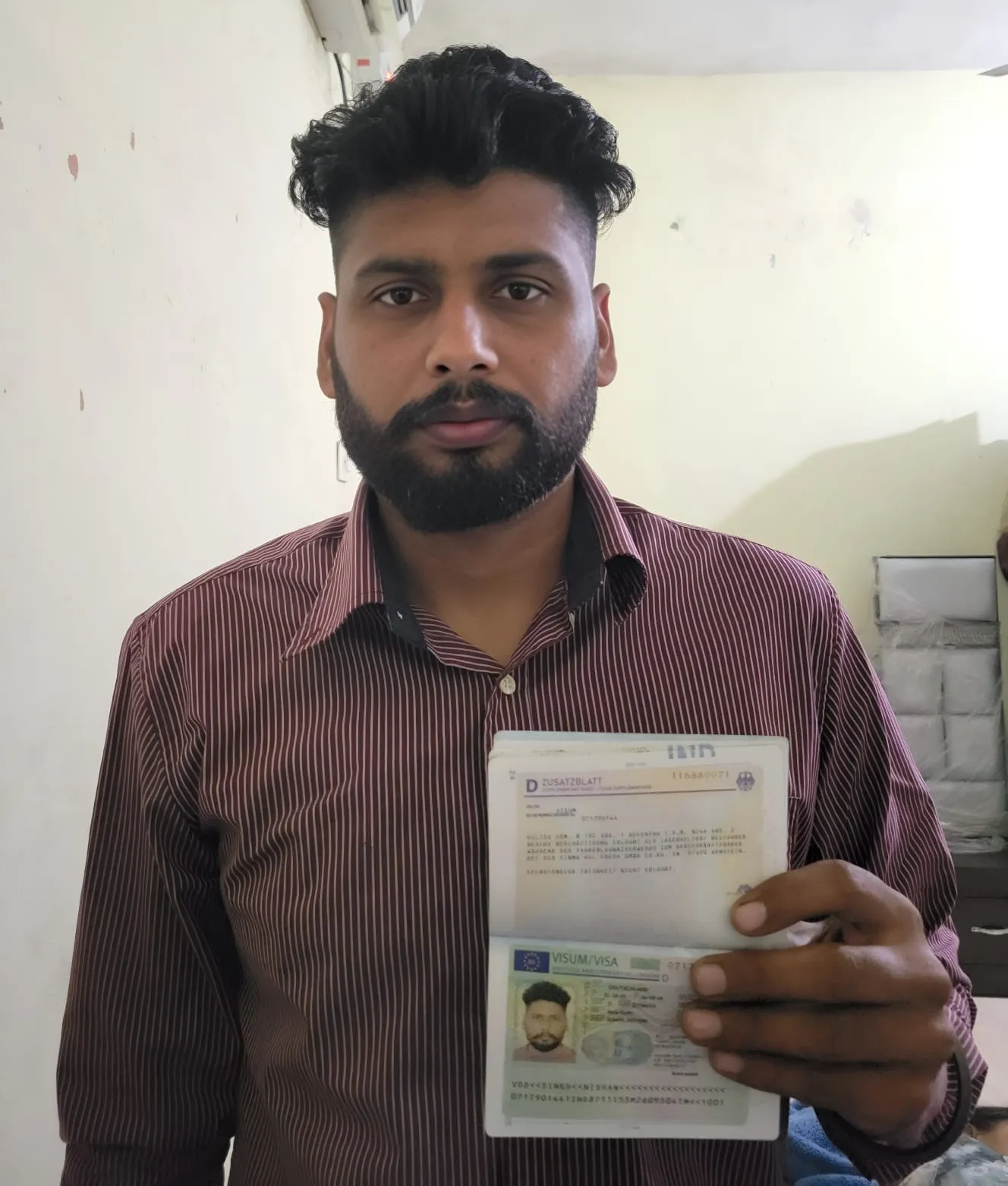
At AtoZ Serwis Plus, we help you build your future in Poland by offering trusted support for legal jobs, work permits, and visa processing—all tailored to your career goals.
Read More
Connecting employers, job seekers, students, and agencies across Poland and beyond.
Hiring skilled or semi-skilled workers for your company in Poland? AtoZ Serwis Plus helps you recruit reliable talent from Asia, Africa, CIS, and EU countries. We provide complete legal recruitment support, Poland work permit processing, and end-to-end onboarding solutions tailored to your business needs. Partner with one of Poland’s most trusted recruitment agencies today.
EmployerLooking for a job in Poland? AtoZ Serwis Plus connects you with verified Polish employers offering legal job offers and work permits. We provide full visa support, document preparation, and transparent migration services. Start your career in Poland with confidence and expert guidance at every step.
Job SeekersAre you a recruiter aiming to supply workers to Poland? AtoZ Serwis Plus offers trusted employer connections, verified job contracts, work permit assistance, and complete visa support. Grow your recruitment business by partnering with Poland’s leading migration and workforce solutions expert.
RecruiterAt AtoZ Serwis Plus, we guide you every step of the way. Our experts provide comprehensive support, including job search assistance, Poland work visa applications, qualification recognition, and basic Polish language learning. Whether you're a skilled worker or a first-time applicant, we make your migration journey smooth and reliable. To get started on your path to living and working in Poland, click one of the contact icons below and connect with our team today.

Copyright © 2009-2026 AtoZ Serwis Plus. All Rights Reserved.